Terms of Reference: Supply of Livestock/Breeding Stock
Catholic Relief Services
Full-time
Qualified
Posting expires Aug 20, 2026
Terms of Reference
Project: Holistic Opportunities for Positive Engagement in Maternal and Child Health (HOPE-MCH) project.
Date Released: August 3rd , 2026
Deadline for Response: August 20th, 2026
Email: tenders.gh@crs.org
Subject: GH9913- (Name of Company)
Introduction/Background
The Holistic Opportunities for Positive Engagement in Maternal and Child Health (HOPE‑MCH) Project is a one-year maternal, newborn, and child health (MNCH) initiative designed to improve the wellbeing of children by strengthening the support systems surrounding families, communities, and health facilities. The project recognizes that children thrive when caregivers are empowered, health systems function effectively, and communities actively contribute to promoting health and resilience.
Over the past year, the project implemented a package of evidence‑based interventions at both community and facility levels to enhance access to quality MNCH services. Target populations included children under five, pregnant women, and lactating mothers. Key activities comprised community health education, capacity building for health providers, improved referral and follow‑up systems, and distribution of essential supplies to facilities. These measures have contributed to increased service utilization, improved health‑seeking behavior, and strengthened awareness of maternal and child health needs across participating communities.
Nutrition and food security form a central component of the HOPE‑MCH project, recognizing their foundational role in reducing maternal and child morbidity. Through community‑led agriculture initiatives, the project will leverage the strengths of Mother‑to‑Mother Support Groups (MtMSGs) to promote climate‑resilient farming, cultivation of fortified and indigenous crops, small‑scale animal husbandry, and sustainable soil management practices. The Department of Agriculture will lead the training process, equipping MtMSG members with practical skills in poultry and small ruminant rearing. This model is expected to expand household knowledge, diversify food production, and increase year‑round availability of nutrient‑rich foods.
To address persistent gaps in the nutritional needs of pregnant and lactating women, the project further aims to empower MtMSGs with both skills and inputs to establish nutrient‑dense home gardens integrated with small livestock production. This holistic approach is designed to strengthen household resilience, reduce vulnerability to food insecurity, and improve the overall nutritional status of mothers and young children.
Objective of Assignment
The objective of this assignment is to procure high‑quality ruminants to support the implementation of the HOPE‑MCH project’s community‑led nutrition and food security activities. The procurement aims to equip/supply Mother‑to‑Mother Support Groups (MtMSGs) with the necessary livestock resources to establish and manage small‑scale animal production units.
Scope of Work
Timelines for delivery
The services are to be delivered within 30 days upon award of contract to the HOPE-MCH communities.
Supply of Livestock/Breeding Stock
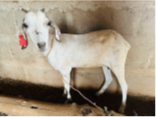
Male Sahelian Goats
Provide healthy, vaccinated and disease‑free small ruminants
Supply well-developed muscles, especially around the hindquarters.
No history of chronic illness
Smooth and shiny hair coat.
Provide well‑matured breeding animals from certified sources, ensuring they have desirable traits, strong productivity history, and no abnormalities.
Female Sahelian Goats
Provide healthy, vaccinated and disease‑free small ruminants.
Provide well‑matured breeding animals from certified sources, ensuring they have desirable traits, strong productivity history, and no abnormalities.
No history of chronic illness
Smooth and shiny hair coat.
Good mothering ability
Selected Does should not have sign of deformities.
Selected Does must have two functional teats.
All Does selected must be at least one and half years and not older than 5 years.
Veterinary Screening and Certification
Conduct pre‑delivery veterinary examinations to confirm that all animals are free from infectious diseases and parasites.
Provide valid veterinary health certificates issued by a registered veterinary authority.
Ensure all animals are vaccinated according to national guidelines prior to delivery.
Feeding and Nutrition
Provide appropriate feeding for ruminants for at least fourteen days.
Supply salt licks for selected goats.
Delivery and Transportation
Safely transport livestock to designated MtMSG or community delivery points.
Ensure humane handling and transportation following animal welfare standards.
Coordinate delivery schedules with project staff and the Department of Agriculture.
Documentation and Reporting
Submit delivery notes, vet certificates, and any other required procurement documentation.
Provide an itemized invoice aligned with delivered quantities and approved specifications.
Collaboration
The supplier will develop a schedule of distribution which will be shared with the project team and the department of Agric for the appropriate support and monitoring.
The district stakeholder, the department of Agric will have to verify and approve/certify the conditions of ruminants as good before its acceptance at the community level.
Specification of Ruminants
DESCRIPTION | SPECIFICATION | QUANTITY | Distribution |
Goat- Female | Sahelian/ Equivalent | 240 | 2 female goats per community |
Goat -Male | Sahelian/Equivalent | 240 | 2 male goats per community |
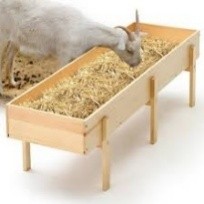
Feeding troughs | Length - 1.2m, width - 0.6m and height/depdth - 0.3 | 240 | 2 per community |
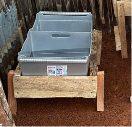
Water troughs | Length - 0.4, width - 0.3m and height/depdth - 0.3 | 240 | 2 per community |
Vaccine and prophylactic treatment (480 animals) | Anthrax (vaccine) | ||
PPR (vaccine) | |||
Prophylactic treatment | |||
OTHER DIRECT COST | |||
Ear tag | 480 | 2 per goat | |
Salt lick | 480 | 4 per community | |
Feed for 14 days for 480 animals | 50kg sack | 1 feed per community | |
Veterinary permit MOFA (Movement permit) | |||
Transportation for sending the animals from market to the coroutine location. (120 project communities) |
Deliverables
Supply of Certified Livestock: Delivery of healthy, disease‑free, well‑matured small ruminants (goats) sourced from certified breeders, meeting all productivity and quality standards.
Veterinary Health Compliance Package: Pre‑delivery veterinary examination reports, valid health certificates, and proof of required vaccinations in line with national guidelines.
Provision of Initial Feed: Supply of one‑month feeding rations for at least 14 days of appropriate feed for ruminants.
Safe Transport and Handover: Humane transport and delivery of animals to designated MtMSG/community sites, including coordination with project staff and the Department of Agriculture.
Complete Delivery Documentation: Submission of waybill certificates, feeding records, schedules, and a final report confirming full completion of all services within 30 days.
Distribution Requirement and Locations
HOPE-MCH Project Communities and Districts
Districts | Communities |
Nanumba North
|
|
Yendi |
|
Gushegu |
|
West Gonja |
|
Central Gonja |
|
Nabdam |
|
Talensi |
|
West Mamprusi |
|
East Mamprusi |
|
Mamprugu Moaduri |
|
Timeline
Thirty days from the time of award of contract
Supplier Qualifications
The selected supplier must meet the following minimum qualifications:
a. Legal and Institutional Requirements
Must be a legally registered business entity authorized to operate in livestock production, trade, or distribution.
Must provide valid business registration documents, tax identification number, and any required trade licenses.
Must comply with national livestock movement and veterinary regulations.
b. Technical Qualifications
Demonstrated experience (minimum 3 years) in supplying goats, or other livestock at scale for community or development projects.
Proven capacity to supply healthy, disease‑free, well‑matured ruminants (Sahelian breed), sourced from certified breeders.
Ability to conduct or facilitate veterinary screening, vaccinations, and issue valid health certificates.
c. Operational Capacity
Ability to transport livestock safely and humanely to 120 HOPE‑MCH communities within the 30‑day timeline.
Adequate staffing, logistics, and technical capability to coordinate with CRS, district stakeholders, and the Department of Agriculture.
d. Past Performance
Evidence of successful delivery of similar livestock supply contracts (reference letters, award contracts, delivery notes).
Positive performance history with donor‑funded or government agricultural programs is an added advantage.
Evaluation
A two-step evaluation process will be applied.
Bidders must meet the following requirement. Vendors who fail to submit the documents below will be eliminated from the Technical and financial evaluation Process.
Valid Business Registration Certificate- include form C/Form A/ Form 3 where applicable.
Valid Tax clearance Certificate
Registration Certificate /Document as Poultry Farmer with Veterinary Services
b. Technical Evaluation (100%)
Criterion | Description | Weight |
Compliance with Specifications | Quality, breed authenticity, health status, veterinary compliance of goats. | 30% |
Supplier Experience & Capacity | Experience with similar assignments, operational capacity, staff qualifications, facilities, past performance. | 20% |
Delivery & Implementation Plan | Feasibility of delivery schedule, distribution plan, animal welfare considerations, proposed logistics. | 20% |
Financial | 30% |
C. Scoring and Award Decision
Each proposal will be scored on a scale of 1–5 for each criterion.
Weighted scores will be calculated by multiplying the score by the criterion weight.
The Supplier with the highest total weighted score will be recommended for award.
CRS Ghana CO Procurement Committee will review and approve the final selection.
Award will be given to the most economically advantageous tender, considering technical quality, price reasonableness, and ability to meet Payment Terms
The payment structure will follow CRS procurement standards and ensure accountability tied to deliverables:
a. Payment Schedule
20% Advance Payment upon contract signing and submission of:
work plan and distribution schedule.
40% Interim Payment upon:
submission of verification/approval by district agriculture officers.
40% Final Payment upon:
Full delivery of goats to all 120 communities,
Submission of all veterinary certificates, feeding documentation, movement permits, and delivery notes,
Acceptance of final delivery report by CRS.
b. Payment Conditions
Payments will be processed within 30 days of receipt and approval of invoices and supporting documentation.
All payments must be made through traceable financial channels (no cash payments).
CRS reserves the right to withhold payment if deliverables are incomplete, animals do not meet specifications, or documentation is insufficient.
c. Performance Assurance
Poor quality or diseased animals delivered will be rejected at the supplier’s cost.
Late delivery beyond the 30‑day timeline may incur penalties as per CRS procurement policy.
Annexes
List any annexes you may have as attachment to this document e.g. project proposal, results framework, etc.

Catholic Relief Services
Company Profile
Since 1943, Catholic Relief Services (CRS) has had the privilege of serving the poor and disadvantaged overseas. Without regard to race, creed, or nationality, CRS provides emergency relief in the wake of natural and man-made disasters.
Through development projects in education, peace and justice, agriculture, microfinance, health, and HIV and AIDS, CRS works to uphold human dignity and promote better standards of living.
CRS also works throughout the United States to expand the knowledge and action of Catholics and others interested in issues of international peace and justice.
Our programs and resources respond to the U.S. Bishops’ call to live in solidarity – as one human family – across borders, over oceans, and through differences in language, culture, and economic condition.